
Composting Convictions and Conundrums
5/10/26
Executive summary: I have finally begun sorting out my compost at home (better late than never), but every new habit does take an adjustment period!
Are you the kind of person who likes to jump straight into a pool or the kind who slowly wades in while gradually acclimating to the temperature of the water? I’ve always been in the latter camp, and I mean, ALWAYS. (Not that I enjoy swimming in the least, let it be known for the record, but I did go as a kid.) In my real life, it means that I’m not an early adopter of anything, whether that’s technology or fashion or trends or … composting. Idk when composting became more widespread, but it was not something I was ever aware of growing up. There was trash and recycling, that’s it. I started seeing green compost bins in the college dining halls 15-20 years ago, but this is California (and the Bay Area), which is ahead of the national pack when it comes to tackling environmental issues. I don’t recall having a curbside composting option when we lived on the East Coast for several years afterward, and it has only been since our return to California five years ago that I’ve seen compost bins more widely available (but not ubiquitous) from restaurants to parks to our homes. I admittedly didn’t get on the bandwagon until recently, as I hate having multiple SKUs (a business term meaning a type of product, essentially) of household supplies languishing in my cupboards. I now need to keep an extra trash can under the sink and a box of compostable trash bags* to suit the occasion. That’s more stuff! And I do not like adding more stuff to my home, as a general rule!
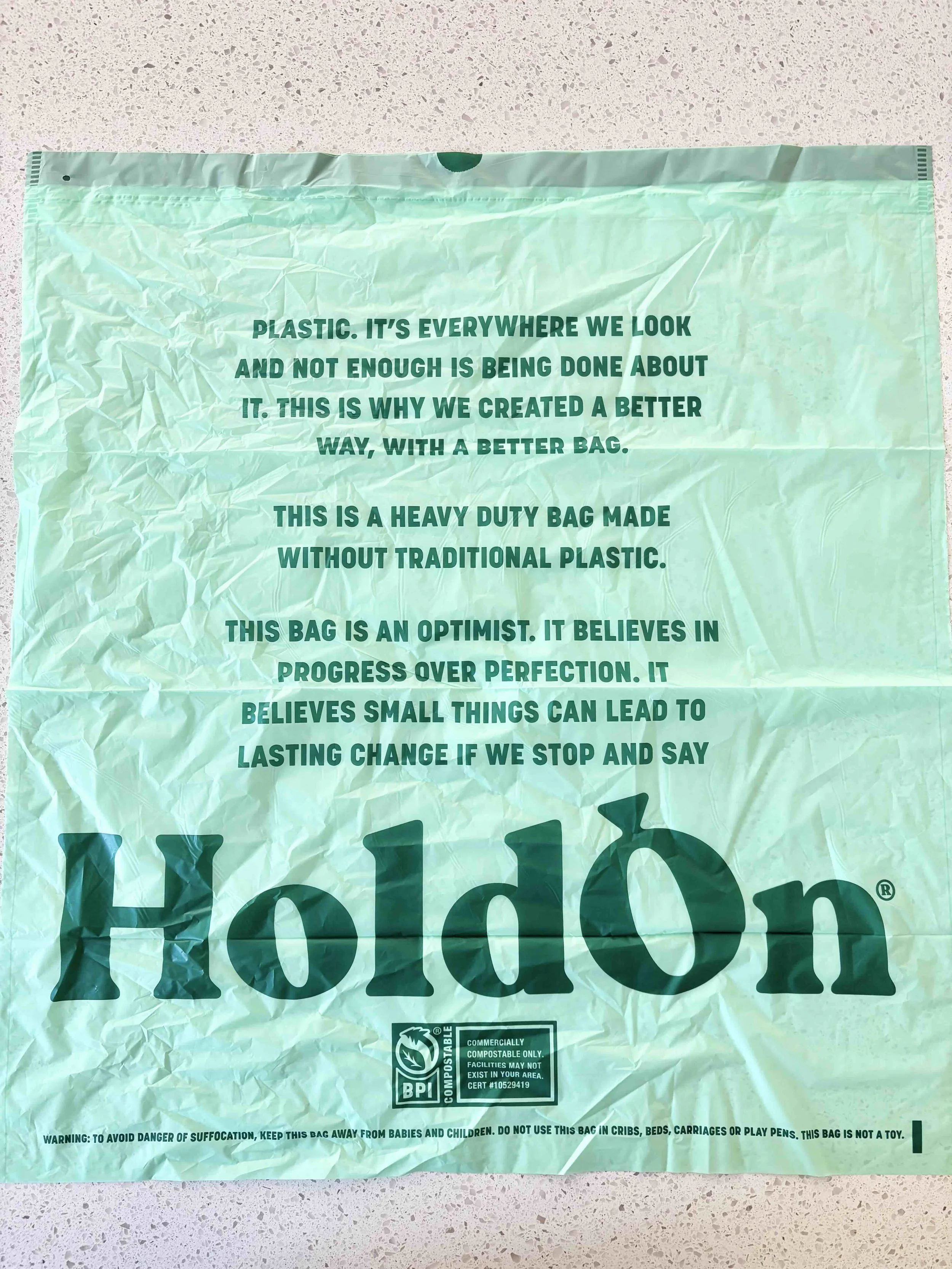
I now need to stock compostable trash bags, which are both more expensive and less durable than plastic trash bags, but it’s a small enough price to pay (literally and figuratively).
I can just manage to squeeze three bins under my kitchen sink: garbage, recycling, compost. After looking into some research, I do feel composting is the right thing to do (the conviction), but it does make my life slightly less streamlined (the conundrum). The first issue I mentioned above is needing to add yet another product to my home supplies list, as compost can’t go in regular plastic trash bags. I’m obsessed with interchangeable and multi-purpose items, and this is not it. The second issue is that tossing out trash has become a slightly slower task as we have to more carefully consider which bin to put it in and separate out any non-compostable waste. (Plus, there are so many variations and specific instructions depending on your municipality that you have to read up on, which is a deterrent to adopting composting … or even recycling, for that matter. Like, does paper with paint from the kids’ art projects go in recycling or compost? Do various waxy paper food wrappers and bags go in the trash or compost? And god forbid if you have any stickers on your produce … although I heard they get filtered out during the composting process, so maybe it’s ok). The third issue is that compostable trash bags are less sturdy than plastic ones, and I was initially worried that they would be flimsy and leaky (by design … sort of). I do not want a stinky sticky mess at the bottom of my trash can if the bag fails, so I did a little Googling to see what brands of compostable bags are the most reliable. People mentioned that Hold On bags felt the strongest, and the name UNNI was also bandied about. I saw that Target carries Hold On, so I grabbed those on my next outing and gave them a try. It’s been a month now, and so far, so good. I still feel a little apprehensive when I dump wet food scraps in (e.g., watermelon rinds and piles of strawberry hulls), as water can degrade compostable bags, but I haven’t encountered any issues yet. I make sure to change the bag every other day, but that’s the same cadence as we were on with taking out the regular trash too, before it gets too smelly.
While composting has complicated my life by 0.1%, I do feel slightly less guilty now about the embarrassing amount of food waste and dirty paper towels generated by my kids. Like … it’s returning to Mother Nature? But the ultimate key is still to reduce how much we consume, and I don’t mean just food. I’m very careful with durable goods like clothing, toys, and the general physical stuff that is the hallmark of our modern prosperous society. I also keep a close tab on what/how much food we have stored at home and usually manage to get through everything in the cupboards and fridge before it goes bad. All of this takes time and effort, which is a luxury many families might not have, I’ll acknowledge that straight up. And the compostable trash bags do cost 2-3x more than regular trash bags, although it amounts to only $50 more per year by my calculations (basically $1 a week) if I stay on the every-other-day cadence. $1 a week to divert my waste from landfills? Yeah, worth it. I might not have been an early or avid composter, but this is a case where it’s definitely better late than never.
*PSA: Make sure the bags you use are indeed commercially compostable. I’ve read that BPI (the Biodegradable Products Institute) is an independent authority on compostable product certification in North America, and products that have the BPI label have been verified to break down in commercial composting conditions (so not dumped in a hole in your backyard). Just saying “biodegradable” or “plant-based” is greenwashing BS, so don’t be fooled!